Who Built the Pyramids? The People Behind Ancient Egypt’s Great Pyramids | Egypt Wonders Tours
culture
Who Built the Pyramids? The People Behind Ancient Egypt’s Great Pyramids
Who really built the pyramids? Discover the workers, craftsmen, farmers, engineers, and administrators behind ancient Egypt’s greatest monuments—and what archaeology reveals about their lives.
Egypt Wonders Team
October 3, 2026
13 min read
Who built the Pyramids of Giza?
This discussion is focused on Who Built the Pyramids? The People Behind Ancient Egypt’s Great Pyramids
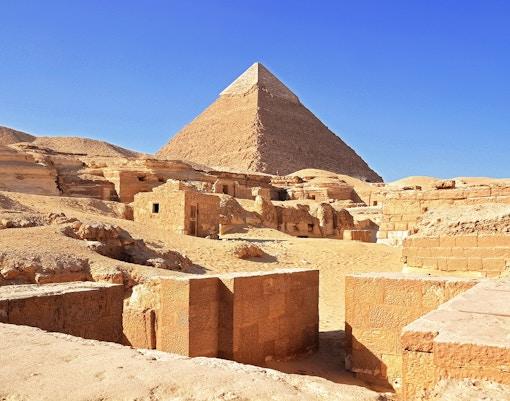
When you stand in front of the Great Pyramid of Giza, one question naturally comes to mind: Who built the pyramids?
For centuries, popular stories have imagined enormous armies of slaves being forced to build Egypt’s pyramids. Movies, books, and even some ancient accounts helped create this familiar image.
But archaeological discoveries at Giza tell a much more interesting story.
The pyramids were built by an organized Egyptian workforce that included skilled craftsmen, stoneworkers, surveyors, boat crews, administrators, food producers, and laborers. They were supported by an entire system designed to provide the people working on the royal monuments with food, housing, tools, transportation, and other necessities.
These were not simply anonymous workers moving stones. They were real people who lived, worked, ate, worshipped, raised families, and were sometimes buried in the shadow of the monuments they helped create.
So, who really built the pyramids?
Were the pyramids built by slaves?
One of the most common questions about the pyramids is whether they were built by slaves.
The archaeological evidence from Giza does not support the traditional image of vast armies of enslaved people being driven to build the pyramids.
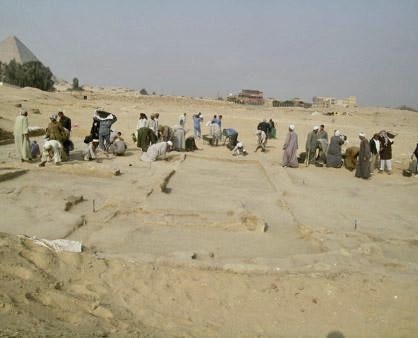
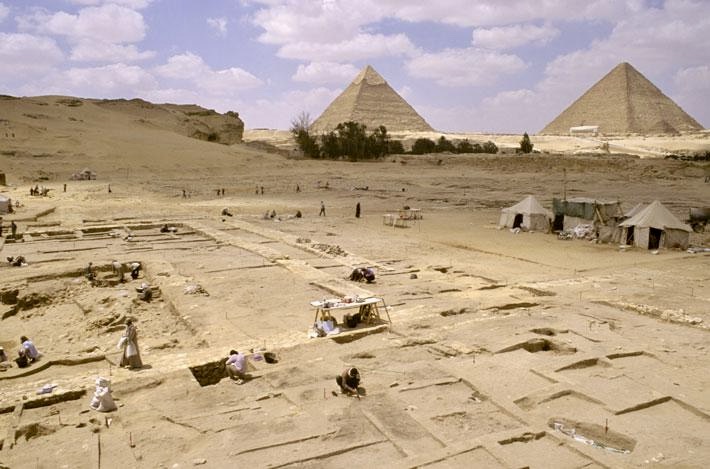
Excavations around the Giza Plateau have revealed a large settlement associated with the pyramid-building workforce. Archaeologists found evidence of housing, bakeries, food preparation, workshops, storage areas, and other facilities needed to support a substantial community.
The discovery of workers' cemeteries was particularly important. Some of the people who worked on the pyramids were buried in tombs near the monuments themselves. Their burials provide evidence that the workforce was part of the Egyptian community surrounding the royal building projects.
This does not mean that every person involved in pyramid construction had the same status or lived the same life. Ancient Egyptian society had different levels of wealth, status, and obligation. However, the archaeological evidence paints a far more complex picture than the popular story of chained slaves.
So, Who Actually Built the Pyramids?
Experience Egypt
Ready to turn this story into your next journey?
Book hand-crafted, zero-friction private tours led by local expert guides across Egypt.
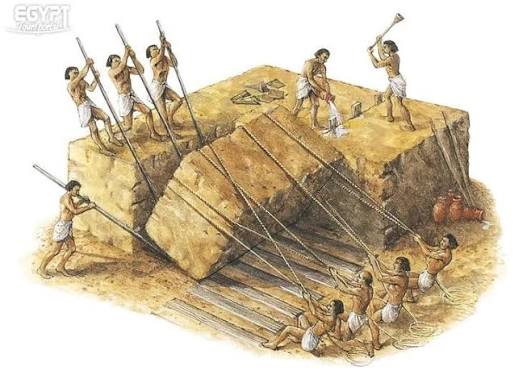
The pyramids were enormous state projects, and building them required much more than people performing physical labor.
The workforce included many different occupations and levels of expertise.
Stoneworkers and quarrymen extracted, shaped, and prepared the enormous quantities of stone required for the royal monuments.
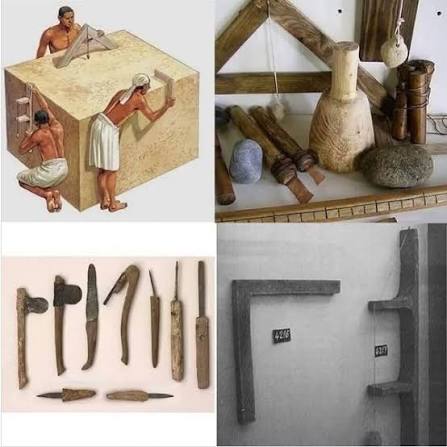
Craftsmen such as carpenters, toolmakers, and metalworkers produced and maintained the equipment needed by the workforce.
Surveyors used measurement, geometry, orientation, and land-surveying skills that were essential to the planning of the monuments.
Boat crews were vital because the Nile was the great transportation highway of ancient Egypt. Workers and materials could be moved along the river and its waterways.
Farmers, fishermen, herders, bakers, brewers, and butchers provided the food needed to support the workforce.
Administrators and overseers organized workers, supplies, transportation, food, tools, and other resources.
In other words, the pyramids were not built by one type of worker. They were the product of an entire organized society.
Where Did the Pyramid Workers Come From?
Ancient Egypt was an agricultural society, and the annual flooding of the Nile shaped the rhythm of everyday life.
During periods when agricultural work was less demanding, additional workers could participate in large state projects. This helps explain how the Egyptian government could mobilize large numbers of people without requiring an enormous permanent construction workforce.
At the same time, the pyramid projects required specialists who possessed skills that could not simply be replaced by seasonal laborers.
The workforce was therefore a mixture of skilled specialists, permanent workers, laborers, and people contributing to the project in different ways.
The pyramids were closely connected to the organization of the Egyptian state and its agricultural economy.
The Workers Lived at Giza
One of the most fascinating archaeological discoveries at Giza is the large settlement associated with the pyramid workforce.
Often referred to as the Workers' Village, the settlement gives archaeologists a glimpse into the everyday world of the people involved in the pyramid projects.
There were places for people to live, prepare food, work, and organize supplies. Archaeologists have also found evidence of large-scale food production and other activities that supported the workforce.
This discovery changes the way we think about the pyramids.
Instead of imagining a monument rising mysteriously from the desert, we can begin to picture the living community that existed around it.
There were workers waking up in the morning, preparing food, carrying out their jobs, repairing equipment, interacting with colleagues, and returning to their homes at the end of the day.
The pyramids were part of a living society.
What Did the Pyramid Builders Eat?
Building a pyramid required enormous quantities of food.
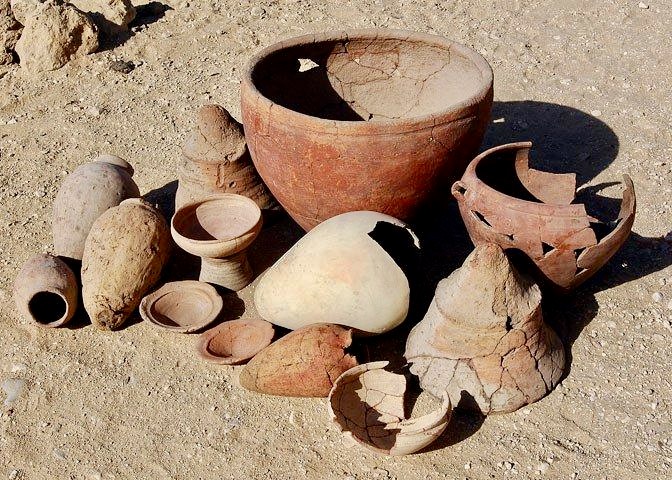
Archaeological evidence from Giza indicates that the workforce had access to substantial amounts of meat and other food supplies, along with staples such as bread and beer.
Large-scale food production was therefore an important part of the pyramid project.
Think about what this means. Before a stone could become part of a pyramid, someone had to feed the person quarrying it, transport the food, prepare the meal, bake the bread, produce the beer, and organize the supplies.
The logistics behind feeding a large workforce were themselves an extraordinary achievement.
The pyramid builders depended on thousands of people whose work may never have brought them anywhere near the monument itself.
Do We Know The Pyramid Builders Names?
Workers' graffiti / inscriptions
Perhaps the most fascinating thing about the workers is that some of them were not completely anonymous.
Graffiti, inscriptions, tombs, and other archaeological evidence have preserved traces of the people involved in the royal building projects.
Some work groups appear to have had names, while individual titles tell us about the different responsibilities people held.
These discoveries allow archaeologists to move beyond the idea of "the pyramid builders" as one anonymous mass.
They were individuals.
They had names, occupations, relationships, and identities.
Some even left evidence of their team organization and working groups in inscriptions associated with their work.
The more archaeology reveals, the more human the pyramid builders become.
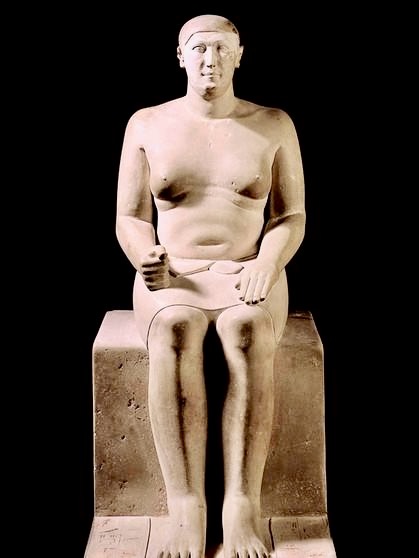
Hemiunu: An Important Man Behind the Great Pyramid
Humiunu the man behind the great Pyramid construction.
One of the best-known individuals associated with the Great Pyramid is Hemiunu, a high-ranking official during the reign of King Khufu.
His tomb is located near the Great Pyramid, and inscriptions identify him as an important figure within the royal administration.
Hemiunu is often described as the architect of the Great Pyramid, although the exact nature of his role is more complicated than that simple title suggests.
What his tomb does demonstrate is the existence of highly ranked officials responsible for major royal projects.
The Great Pyramid was not an unplanned collection of laborers. It was part of a sophisticated administrative system headed by people who could organize enormous resources on behalf of the king.
What About the Workers' Tombs?
The discovery of workers' tombs near the pyramids is particularly revealing.
Their location and contents provide evidence about how some of the people who worked on the monuments were regarded by their society.
The burials also remind us of something important: the people who built the pyramids believed in the same world of gods, death, and the afterlife that the pyramids themselves represented.
They were not outsiders building monuments for a civilization they did not understand.
They were part of ancient Egyptian society and its religious world.
Their tombs give us a rare opportunity to connect the enormous monuments of Giza with the ordinary people who helped make them possible.
pyramids-workers-cemetary-near-giza-pyramids
Why Did They Build the Pyramids?
To understand the people who built the pyramids, we also need to understand why the pyramids mattered.
The pyramid was not simply a gigantic construction project.
It was part of the royal funerary complex and the religious beliefs surrounding the king's death and eternal existence.
The pharaoh occupied a central position in ancient Egyptian society, and his successful transition into the afterlife was closely connected with the stability and prosperity of the kingdom.
For the people involved in the project, therefore, building the king's monument was part of a much larger religious, political, and social system.
The pyramid represented royal power, religious beliefs, and the Egyptian understanding of life, death, and eternity.
The Pyramids Were a National Project
the pyramid was a national project
It is tempting to look at the Great Pyramid and imagine only the people who physically moved or shaped the stones.
But the real story is much larger.
The pyramid depended on farmers producing food, fishermen and herders providing supplies, bakers and brewers preparing meals, quarry workers extracting stone, craftsmen making tools and equipment, boat crews transporting materials, surveyors measuring and planning, administrators organizing resources, overseers coordinating workers, and laborers carrying out countless physical tasks.
In other words, the pyramids were built by a society.
That may be the most important answer to the question, "Who built the pyramids?"
The monument was the visible result of an enormous network of people whose different skills and responsibilities came together under the organization of the Egyptian state.
How Many People Built the Great Pyramid?
The exact number of people involved in building the Great Pyramid remains uncertain.
You will sometimes see very large figures quoted for the pyramid workforce, but estimates vary depending on whether they refer to the number of people working at the site at one time or the total number of people who contributed to the project over many years.
What is clear is that the Great Pyramid required a highly organized workforce and a large supporting population.
The achievement was not simply the result of having many people. It was the result of organization.
Thousands of people had to work within a system capable of supplying food, materials, tools, transportation, housing, and administration for a major royal project.
Were the Pyramid Builders Skilled Workers?
Yes—but not everyone needed the same level of specialized skill.
Some jobs required considerable expertise, particularly stoneworking, surveying, carpentry, administration, and other specialized crafts.
Other workers performed physically demanding tasks that could be learned through organization and experience.
This distinction is important because the phrase "pyramid builders" covers a remarkably diverse group of people.
There were specialists and laborers, supervisors and support workers, permanent workers and seasonal participants.
Together, they made the project possible.
What Do We Still Not Know About the Pyramid Builders?
Despite the extraordinary amount of archaeological evidence discovered at Giza, many questions remain.
We do not know the names and personal stories of everyone who worked on the Great Pyramid.
We cannot reconstruct every aspect of the workforce's organization.
And although archaeology has revealed much about the workers' settlement, diet, burials, and administration, there are still details about the organization of the project that remain uncertain.
That is part of what makes ancient Egypt so fascinating.
Every generation of archaeologists can discover new evidence that changes our understanding of the past.
The pyramids have survived for more than 4,500 years, but the story of the people who built them is still being uncovered.
The People Behind the Stones
The Great Pyramid is often described as one of humanity's greatest architectural achievements.
And it is.
But perhaps the most fascinating thing about it is not simply the enormous amount of stone or the monument's extraordinary size.
It is the human story behind it.
Thousands of ancient Egyptians—and countless others who supported them—contributed to a project that would survive for more than 4,500 years.
They were workers, craftsmen, farmers, boatmen, administrators, parents, children, and members of communities.
They lived thousands of years ago, but the evidence they left behind allows us to see them not simply as "the people who built the pyramids," but as human beings who were part of one of the most remarkable societies in the ancient world.
And when you stand at Giza today, you are not only looking at the monuments of pharaohs.
You are standing in the landscape of the people who built them.
Want to Discover the Pyramids With our Egyptologists?
Visiting the Pyramids of Giza is very different when you understand the people, beliefs, and society behind the monuments.
On a private Egypt tour with Egypt Wonders Tours, you can explore the Great Pyramid, the pyramids of Khafre and Menkaure, and the Great Sphinx while learning about the civilization that created them.
Whether you are planning a short Cairo visit or a longer journey combining Cairo, Luxor, Aswan, and the Red Sea, we can create a private Egypt itinerary around your interests, pace, and travel style.
Explore our Cairo and Giza tours
Explore our Egypt tour packages
Plan your custom Egypt tour
Tours are conducted by Egypt Wonders Tours.
Related Reading
Want to learn about the engineering, tools, transportation, and construction techniques behind Egypt's pyramids?
Read: How Were the Pyramids Built?