New Tomb of Sekhentio-Ptah Discovered at Saqqara: What We Know So Far | Egypt Wonders Tours
culture
New Tomb of Sekhentio-Ptah Discovered at Saqqara: What We Know So Far
A remarkable new discovery at Saqqara has revealed the tomb of Sekhentio-Ptah, an important Old Kingdom official. Discover what this fascinating tomb reveals about ancient Egyptian beliefs and burial practices.
Egypt Wonders Team
October 2, 2026
7 min read
“Saqqara has done it again.”
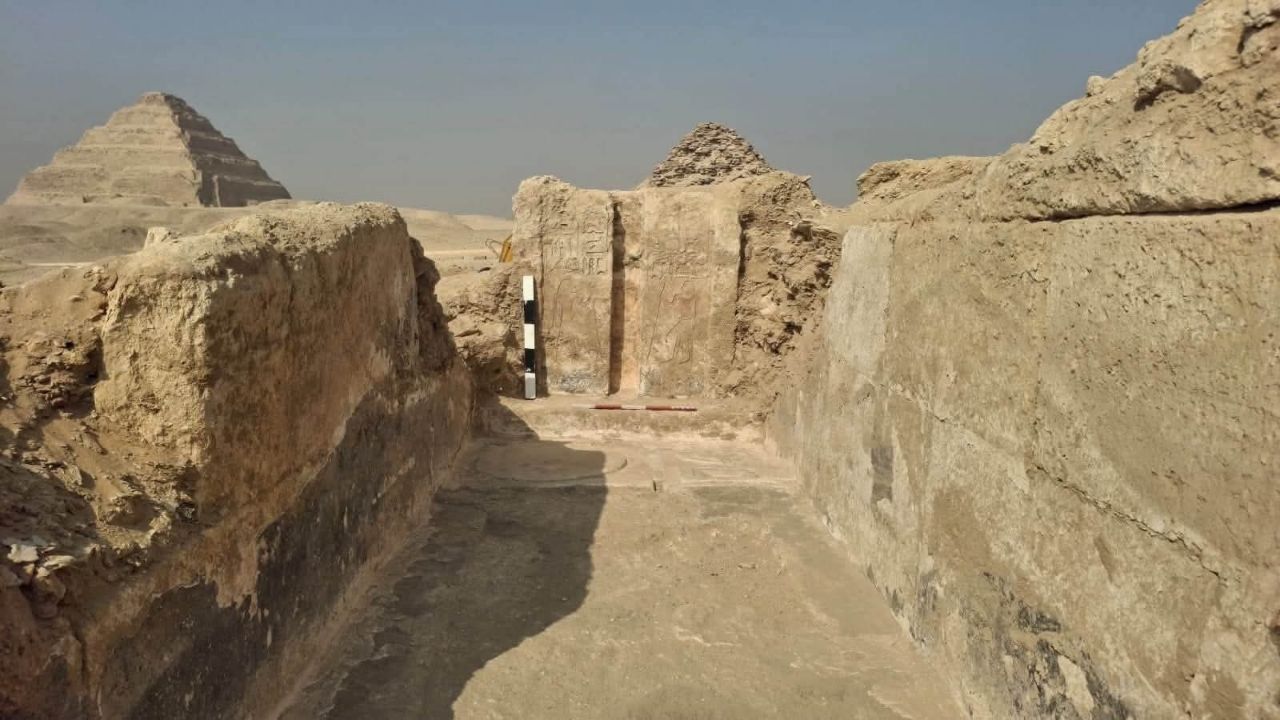
One of Egypt's most important archaeological sites has revealed another piece of its extraordinary history: the tomb of an important Old Kingdom official named Sekhentio-Ptah was discovered in Sector A at Saqqara during the first season of excavations by an Egyptian archaeological mission working west of the Bubasteion at Saqqara.
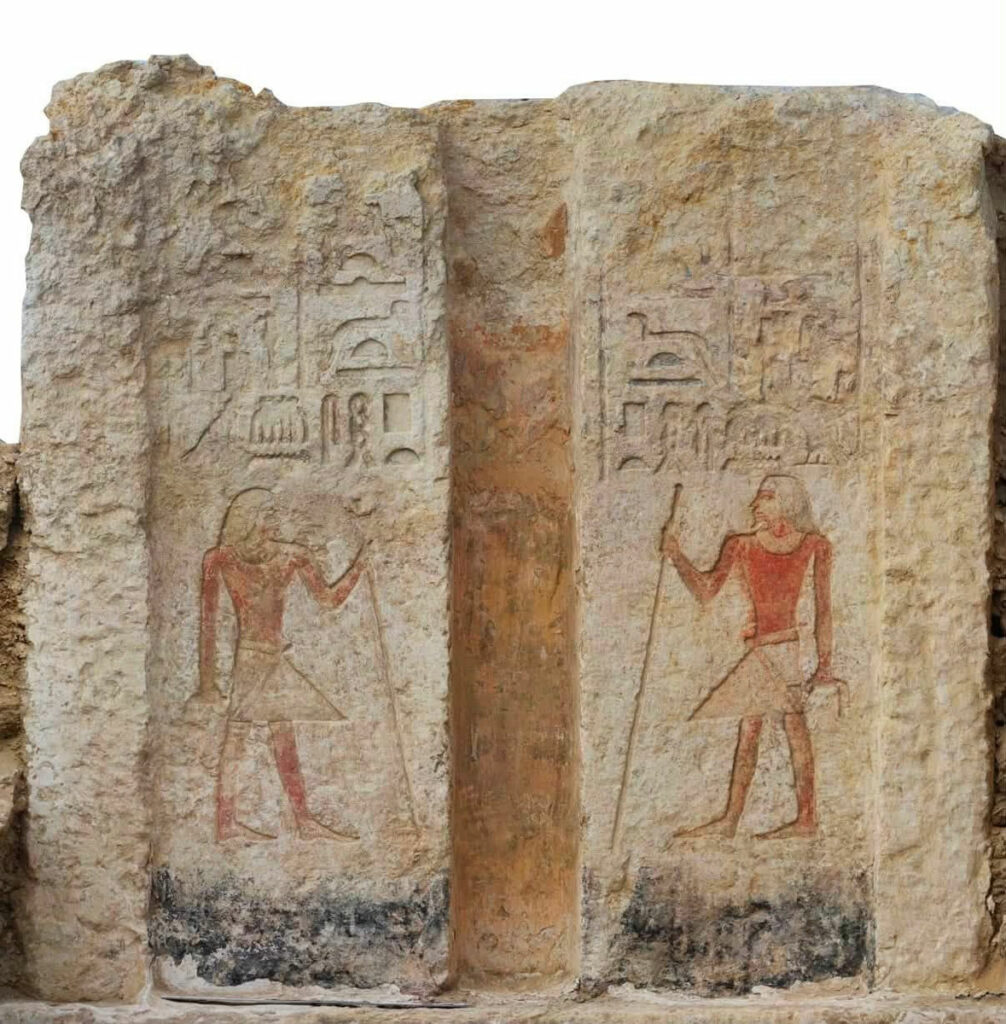
The discovery includes the remains of a funerary chapel, a beautifully preserved false door, and a remarkable group of alabaster funerary objects found in their original position. Archaeologists also uncovered a network of later burial shafts containing human burials, painted funerary cartonnage, more than 100 faience ushabti figurines, three sealed stone sarcophagi, a wooden falcon figure, pottery, and other archaeological objects.
For anyone fascinated by ancient Egypt, this is much more than the discovery of another tomb. It provides an opportunity to understand how Saqqara developed as a cemetery, how ancient Egyptians cared for their dead, and how the same sacred landscape continued to be used and reused for thousands of years.
Who Was Sekhentio-Ptah?
The inscriptions discovered on the false door and funerary objects allowed archaeologists to identify the owner of the tomb as Sekhentio-Ptah.
He lived during the Old Kingdom, the period that witnessed the construction of Egypt's great pyramid complexes.
His titles indicate that he was not an ordinary individual. Among the titles recorded are:
Royal Chamberlain
Overseer of All the Works of the King
Overseer of Royal Documents
Keeper of the Secrets of Royal Decrees
Priest of the goddess Maat
Overseer of the Scribes
These titles provide an important glimpse into his position within the administrative structure of the Old Kingdom.
In ancient Egypt, the king's government depended on a large and sophisticated administration. Officials supervised construction projects, documents, scribes, religious institutions and many other aspects of the state.
The title **"Keeper of the Secrets of Royal Decrees"** is particularly intriguing. It suggests a position involving access to important royal decisions and documents.
Rather than seeing the pyramids only as monuments built by anonymous workers, discoveries such as this remind us of the enormous administrative system behind the organization of the Egyptian state.
#sekhentio-ptah tomb#saqqara discovery
Experience Egypt
Ready to turn this story into your next journey?
Book hand-crafted, zero-friction private tours led by local expert guides across Egypt.
One of the most significant parts of the discovery is the remains of Sekhentio-Ptah's funerary chapel, including its false door.
The false door was not simply an architectural decoration.
In ancient Egyptian funerary belief, it represented a symbolic passage between the world of the living and the world of the dead. The deceased could symbolically receive offerings through this connection.
False doors became an important feature of private tombs, particularly during the Old Kingdom.
What makes the discovery especially valuable is that the false door was found in its original position.
Even more importantly, archaeologists discovered a complete group of alabaster funerary objects directly in front of it, further more, such a discovery helped archeologists to answer some important questions, such as:
How were the objects used?
What rituals took place in the chapel?
How were offerings presented to the deceased?
Why Is This Discovery Important?
There are several reasons why the discovery of Sekhentio-Ptah's tomb matters.
1. It adds to our knowledge of Old Kingdom officials
The tomb provides additional information about an important administrator who served within the royal government.
His titles offer evidence about the organization of the Egyptian state and the responsibilities of high-ranking officials.
2. The funerary objects were found in context
The alabaster objects discovered in front of the false door form a complete group and were found in their original location.
This gives archaeologists an opportunity to study funerary rituals and the arrangement of objects within the chapel.
3. It helps us understand Saqqara's long history
The Old Kingdom tomb exists within a much larger cemetery that continued to be used during later periods.
The mixture of discoveries from different periods demonstrates how the necropolis evolved over time.
4. Excavations are still continuing
The Egyptian archaeological mission is continuing its documentation, analysis and scientific study of the discoveries.
That means the story of Sekhentio-Ptah's tomb is not necessarily finished.
Further excavation and research may reveal additional structures, objects and information about the cemetery.
sekhentio-ptah-tomb-saqqara-discovery
Is the Tomb of Sekhentio-Ptah Open to Visitors?
At the time of writing, the discovery has been announced as the result of the first excavation season, and the archaeological mission is continuing its documentation and study of the site.
Travelers should therefore **not assume that the newly discovered tomb is currently open to the public**.
This is an important distinction when reading about archaeological discoveries in Egypt. A tomb can be announced in the news long before it becomes part of the visitor route.
For now, visitors to Saqqara can explore the many monuments that are already open to the public, including the Step Pyramid complex and other important tombs and monuments in the necropolis.
Why Saqqara matters with an Egyptologist?
While the Pyramids of Giza are a must-see, Saqqara offers a deeper look into ancient Egypt. The Step Pyramid of Djoser, private tombs, hieroglyphic inscriptions, and funerary scenes reveal how Egyptian burial traditions and architecture evolved over thousands of years.
The recent discovery of Sekhentio-Ptah's tomb is another reminder that Saqqara is still revealing new chapters of its history.
Saqqara becomes much more meaningful when you understand the stories behind its monuments. A false door, offering scene, or hieroglyphic inscription can reveal fascinating details about ancient Egyptian beliefs and daily life.
At Egypt Wonders Tours, our tours are conducted by experienced local Egyptologists who connect the monuments with the people, beliefs, and stories behind them. Whether you visit Saqqara on a Cairo day tour or as part of a longer private Egypt itinerary, we can tailor the experience to your interests.
Saqqara's Story Is Still Being Written:
The tomb of Sekhentio-Ptah reminds us that Egypt's ancient past is not limited to the monuments we already know. From the false door and alabaster offerings to later burial shafts, ushabtis, coffins, and pottery, each discovery adds another piece to the story.
Saqqara is more than an ancient cemetery—it is a sacred landscape that remained important for thousands of years, and its story is still being uncovered today.
When you visit Egypt, don't just see the famous monuments. Discover the stories behind them.